US Amateur – Michigan, USA

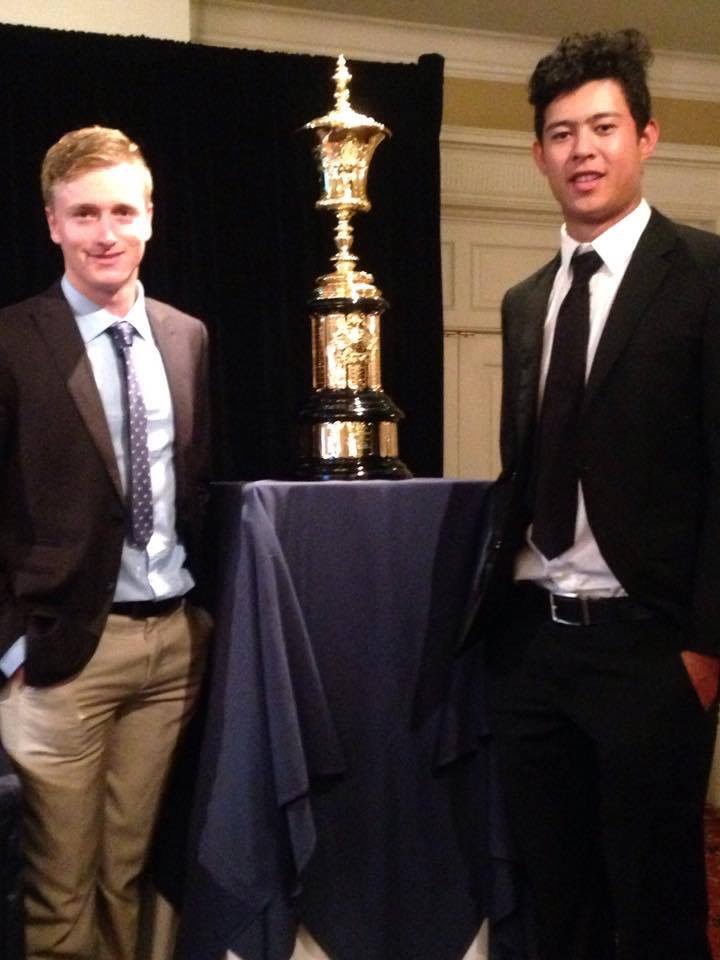
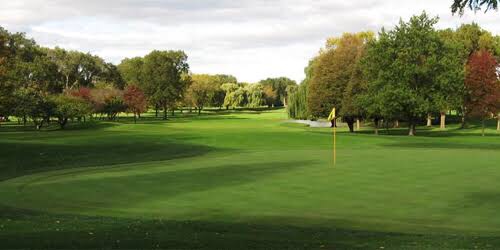
The US Amateur was played between the 15th and 21st August at the Oakland Hills Country Club in Michigan.  Nick qualified to play in this event by winning the US Amateur Qualifier held at the Fremont Club in Nebraska.  Nick’s fellow compatriot and Iowa State team member, Denzel Ieremia, also qualified for the event be placing second at the qualifier held at the Blue Hills Country Club in Kansas City, Missouri.

The US Amateur is the pinnacle event of the season and all 312 players have to qualify first to be able to play in the event.  These players are the creme de la creme of the amateur golfing world so it is a big deal to qualify.  The format of the tournament is two rounds of stroke play with the top 64 players advancing to the match play section.  Nick shot an even par 70 on the North Coufrse in round one and a 78 on the South Course in the second round meaning he missed being in the top 64.  Denzel tied for 57th with 23 other players so had to participate in a 23 way playoff for the last eight spots.  He made it to the third play off hole before being eliminated.  

The final 64 players play off until there are two players remaining.  These players were Curtis Luck from Australia and Brad Dalke from Oklahoma who played 36 holes on the South Course to find the eventual winner.  Curtis Luck won by being 6 holes up with 4 to play.  He gets an automatic entry into the 2017 Masters, US Open and British Open.

The U.S. Amateur Championship is the oldest USGA championship and was created in 1895 because of a controversy. In 1894, two clubs – Newport (R.I.) Golf Club and New York’s St. Andrew’s Golf Club – conducted invitational tournaments to attract the nation’s top amateur players. Both clubs proclaimed their winners as the national champion, so golf clearly needed a national governing body to conduct national championships, develop a single set of rules for all golfers to follow, and to promote the best interests of the game. With that, representatives from five clubs founded the USGA on Dec. 22, 1894. As a result, in 1895, its first full year of operation, the USGA conducted Amateur, Open, and Women’s Amateur Championships. The first U.S. Amateur Championship was conducted at Newport Golf Club in October and Charles B. Macdonald became the first U.S. Amateur Champion. Since the inaugural event, the U.S. Amateur has enjoyed an illustrious history of great champions, including Bobby Jones, Chick Evans, Phil Mickelson, Jack Nicklaus, Arnold Palmer and Tiger Woods.

In Nick’s own words…….

The US Amateur was very special! What made it so memorable was that Denzel and I were the travelling contingent representing both New Zealand and Iowa State. We went in knowing our games were on the verge of being special and that anything can happen in the match play format – we just have to make the top 64 and anything can happen.

I played the North Course in the first round shooting a respectable even par 70 – game was up and down but my short game kept me in it. The second round saw a poorer driving exhibition on the harder golf course and consequently I kept on hitting my ball into positions where I couldn’t advance it to the green. I shot a 78 on the South Course to miss the match play by 6 shots.

Although my game didn’t quite come together when I needed it, I know that I will turn it on shortly. I have so much trust in my plan and the work that I have been doing that one of these days a switch will flick and it will take me to the next level. I’m looking forward to continue on working for that very day!

For us now it’s back to the reality of school! We have 3 weeks of classes before our first event in Wisconsin, following that I will be meeting the New Zealand team in Mexico for the World Amateur Team Championship. Exciting times ahead!!!

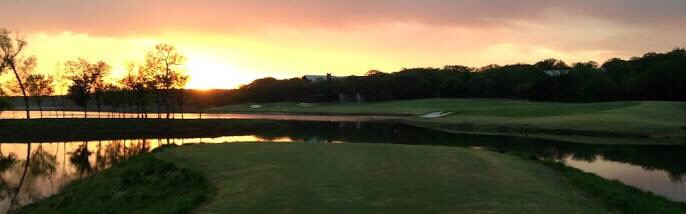
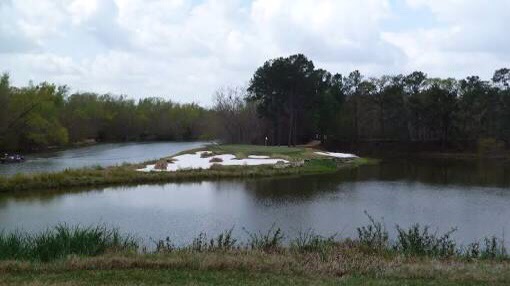
Oakland Hills Country Club

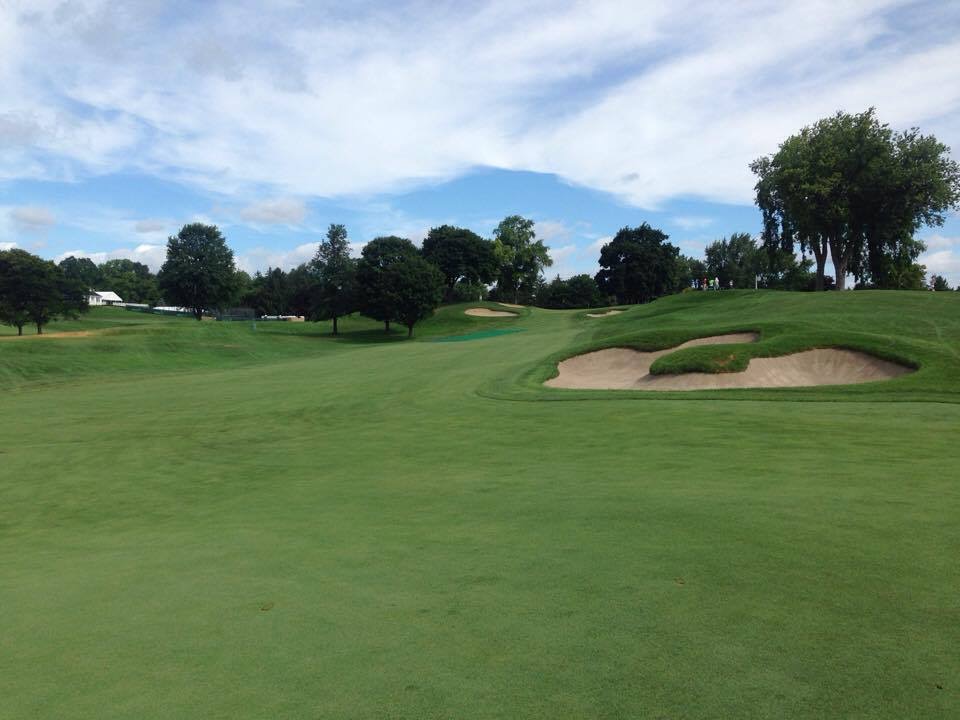
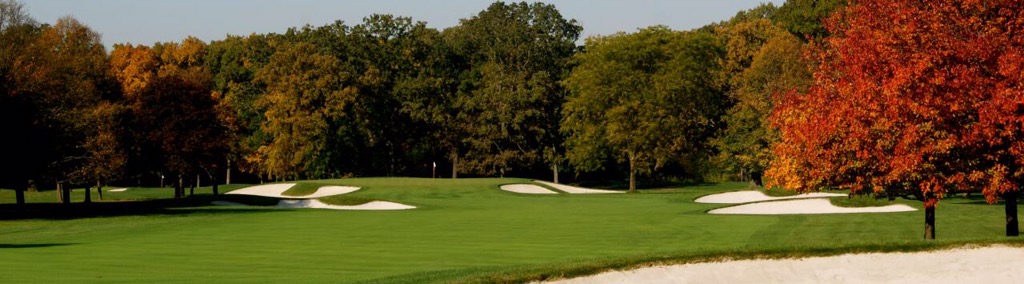
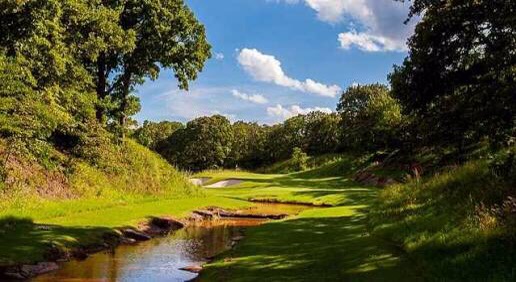
Oakland Hills Country Club is a private golf club in Bloomfield Township, Michigan. It consists of two 18-hole courses designed by Donald Ross: the South Course (1918) and the North Course (1923).

Founded in 1916, Oakland Hills Country Club has played, and will continue to play, a significant role in the history of championship golf in the United States. The South Course has played host to 16 of the most prestigious golf championships, including nine majors – six U.S. Opens and three PGA Championships, including the 90th PGA Championship in 2008 – as well as two U.S. Senior Opens; a U.S. Women’s Amateur; a U.S. Amateur; a Western Open; a Carling World Open, and the 35th Ryder Cup in 2004. Some of the greatest players ever to play the game including Arnold Palmer, Jack Nicklaus, Gary Player and Ben Hogan have competed and won on the famed South Course … “The Monster”.

Posted in Michigan, United States of America | Tagged | Leave a comment

The Players Amateur – South Carolina, USA

The Players Amateur is an annual amateur golf tournament which was first played in 2000. It is organized by the Heritage Classic Foundation, which also sponsors the RBC Heritage on the PGA Tour. It is currently played at Berkeley Hall Club in Bluffton, South Carolina.  There are two courses at Berkeley Hall – The North Course and The South Course – this year’s tournament was played on The South Course.  Past winners of this tournament include Bill Haas (2002), Camilo Villegas (2003) and Rickie Fowler (2007).

Unfortunately Nick did not have his best tournament this week, he tied for 60th and missed the cut.  He felt like he played much better than his score reflected although further analysis points to poor execution and too many mistakes on the golf course.  He has been working extremely hard physically but thinks perhaps his mental game needs a tweak.

Despite the result, Nick thoroughly enjoyed being part of the tournament.  He said Berkeley Hall is an absolutely amazing place and the players are treated so well.  His time at Berkeley Hall cemented how much he loves the game and how much he is willing to sacrifice in order to reach his potential.  The week was up there with one of the more frustrating ones golf wise but he still came off the course thinking that there is still no other place he would rather be.

The tournament was won by Cheng Jin on eight under.  Cheng Jin also won the Asia Pacific Amateur Golf Tournament in Hong Kong in 2015.

Berkeley Hall Club

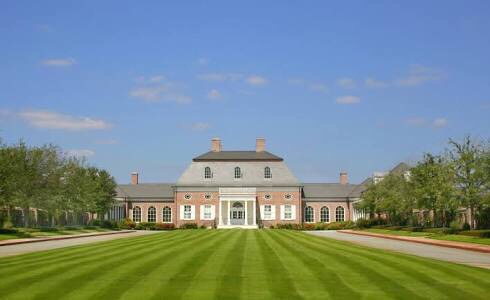
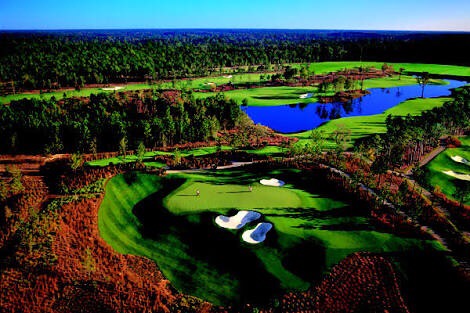
Golf in its purest form awaits you at Berkeley Hall, the most distinguished private golf community in golf-rich Hilton Head area. Great golf is the very heart of Berkeley Hall. With no interior homes or roads, two Tom Fazio core golf courses meander through an open coastal landscape framed by seaside grasses. A round of golf feels like a walk in the park rather than a ride through the subdivision. Dramatic elevation changes, beautiful water features, and bold strategic bunkering showcase the designer’s artistry.

The North Course is a marvel of tranquil lakes, bold fairways, challenging bunkers and large contoured bentgrass greens. The combination of elevation changes, open vistas, native grasses, water features, and strategically placed bunkers give the North Course an unmatched beauty of its own.”The North Course at Berkeley Hall is one of the finest and most dramatic courses I have ever designed.” ~ Tom Fazio.

The South Course offers a classic parkland golf experience, with a canopy of mature forest and a backdrop of the meandering Okatie River. Tree-lined fairways, glistening lakes and boldly contoured green complexes create a dramatic and challenging Lowountry beauty. “We may have saved the best for last.” ~ Tom Fazio, on the South Course.


Posted in South Carolina, United States of America | Tagged | Leave a comment

Western Amateur – Illinois, USA

Nick played in the 2016 Western Amateur Championship at the Knollwood Club in Lake Forest, Illinois.

The Western Amateur has been a prestigious national tournament since its founding in 1899. Many of the great names in golf have won the Western Amateur. Many more have competed in the championship but were unable to conquer the grueling test that is the Western Amateur. 

156 invited players come from across the globe to play one of the toughest formats in amateur golf. The field will play 18 holes of individual stroke play on Tuesday and Wednesday after which the field will be cut to the low 44 scores and ties. Those remaining will play 36 holes of individual stroke play on Thursday to determine the low 16 finishers. The “Sweet Sixteen” will compete at Match Play on Friday and Saturday to decide the champion.

Nick had rounds of 70 and 74 in the first two rounds to be in a tie for 29th.  This position meant he advanced through to the third and fourth rounds in which he shot a 75 and a 72 respectively.  He tied for 40th with a total of 291.  The winner of this part of the tournament, Sam Horsfield, finished with a total of 268.

The eventual winner was Dylan Meyer from Indiana.  He had survived a 6 man playoff to make it into the Sweet Sixteen and then defeated Sam Horsfield in the final of the match play.

In Nick’s own words….

I hit my driver really well this week.  I have been putting myself under a lot of pressure and really getting uncomfortable during my driving practice at home and I think everything I have been doing in terms of technique and artist practice is starting to bleed into my competitive golf.  My putting from inside 5 feet was solid again.  I didn’t feel I hit my irons consistently enough to get myself into contention.  The complexity of the greens made it difficult to chip around so I had to be really precise with what I wanted to do.

I will be back at ISU’s practice facility this week working hard on my long iron play as well as going through my usual practice vault of drills in preparation for next week’s US Amateur at Oakland Hills, Michigan.  Exciting times : )

Knollwood Club

Knollwood’s championship golf course was designed by famed golf course architecture firm, Colt and Alison, and opened for play in 1925. In 2009, restoration specialist Keith Foster was brought in to help oversee a two phase renovation project. Foster added white sand to all the bunkers, reshaped a few fairways and greens, and added over 300 yards to the championship layout. Knollwood now stretches over 7,200 yards from the tips.   

Posted in Illinois, United States of America | Tagged | Leave a comment

US Amateur Qualifier – Nebraska, USA

On the 18th July, Nick played in the US Amateur Qualifier at the Fremont Golf Club in Nebraska.  This tournament was played over 36 holes and Nick took medalist honours and more importantly secured the only qualifying spot for the US Amateur Championships which are to be held from the 15th to the 21st August in Michigan.

His fellow Iowa State teammate and fellow Kiwi, Denzel Ieremia also qualified in a separate tournament.


Nebraska Golf Association – Press Release

Fremont – Nick Voke, an Iowa State golfer, earned medalist honors and the lone qualifying spot, at Sectional Qualifying for the 2016 U.S. Amateur Championship at Fremont Golf Club on Monday.
Voke had quite the day, after making birdies on three of the last four holes on the front nine in the morning, he stepped up to the par-3 10th hole. Voke struck a 9-iron right at the flagstick and it rolled in for a hole-in-one to get him to 4-under on the day. He added another birdie for a 5-under 66 to lead after the first round. Kearney’s Andy Sajevic and Bellevue’s Jose Vega were two strokes back after each fired a 68 (-3).

Voke cooled off in the afternoon for a bit, playing his first nine holes in even-par, while Sajevic heated up. Sajevic shot a 3-under 32 on the front nine, including an eagle on the par-4 7th hole. He then rolled in a birdie on No. 17 and was the first player in at 7-under 135. Lincoln’s Michael Colgate, a Husker golfer, also shot 32 (-3) on the front nine and closed out his round with birdies on four of his last six holes. Colgate left another birdie putt just a few inches short on No. 18, tying Sajevic at 7-under.

Then Voke came up with some more magic, he birdied five of his last eight holes, including Nos. 17 and 18 to post 9-under 133 after a second round 67 (-4). Voke advances to the 2016 U.S. Amateur Championship at Oakland Hills Country Club in Bloomfield Hills, Michigan on August 15-21.

Sajevic and Colgate went into a play-off to determine the first and second alternates, with Sajevic winning on the third play-off hole. Sajevic will be the first alternate and Colgate will be the second alternate, after being the first alternate the past two years.

The Fremont Golf Club

The Fremont Golf Club can trace its roots back to the first decade of the 1900’s. The Club commissioned noted architect, Tom Bendelow, to build the original 9 holes, which was completed in 1930. The Scottish born Bendelow was one of the more prolific architects in the first third of the twentieth century. He is best known for his design of Medinah Country Club no. 2, which he built in 1926. This course has been the site of U.S. Opens as well as PGA Championships. 

In 1960 or 1961, the original clubhouse burned. The Club used that fireas an impetus to move the clubhouse and expand the course from 9 holes to 18 holes. The Clubhouse was relocated to Somers Street. Illinois golf architect, David Gill, was hired to expand the course. In fact, Mr. Gill added 11 holes. Seven of the original Bendelow holes remain. The original Bendelow holes are 3,4,5,7,9,15 and 16.

In 1981 the clubhouse was again gutted by fire. The original architect, Gordon Jenkins, of Fremont, designed and supervised the reconstruction of the existing clubhouse.

Over the years, there have been many improvements made to the golf course and clubhouse by Club members. Length has been added, bunker and pond constructed, and new and improved irrigation systems have been added. The course has matured, as has the magnificent collection of trees framing the holes. The Club maintains top-flight course grooming equipment. In 1987, Club leadership worked with noted golf course contractor, Bill Kubly of Landscapes Unlimited in Lincoln, to move the infamous upside down and backwards 12th green, designing a new split-level green located 50 yards behind the original green. Recently the Club has purchased 100 acres north of the existing course. The ownership of this land gives the Club many options for the future. Today, one will find a beautiful, traditional, parkland style golf course. It is known for its narrow, tree-lined fairways and sloping slick greens. The course is challenging for the better player and, at the same time, playable and enjoyable for the average player. The members never tire of playing this beautiful and challenging golf course. Just ask one.

Posted in Nebraska, United States of America | Tagged | Leave a comment

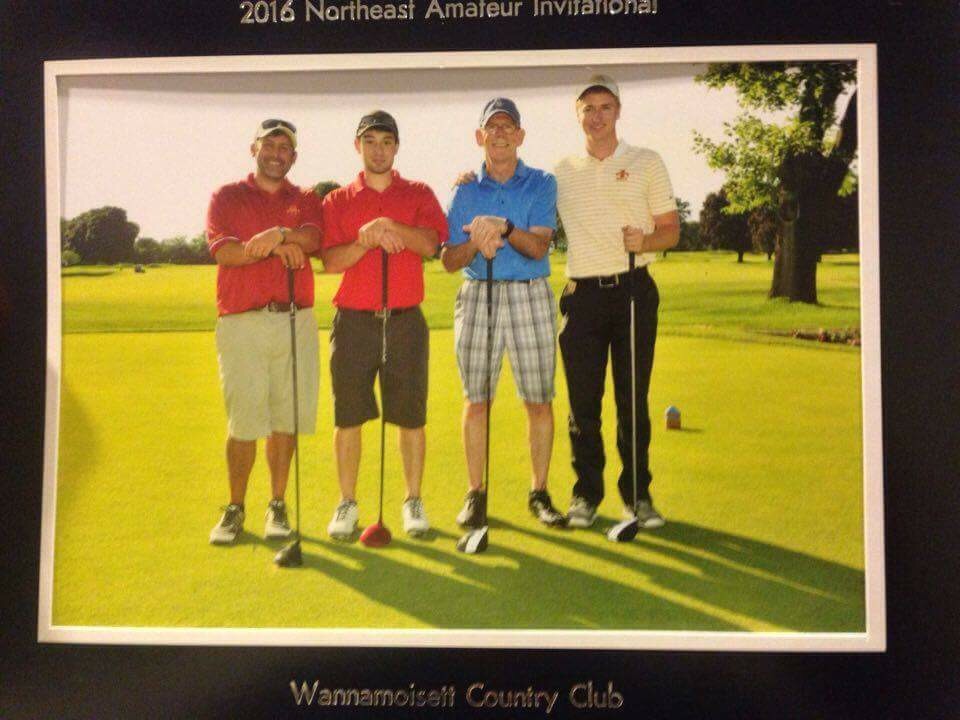
Northeast Amateur Invitational – East Providence, Rhode Island

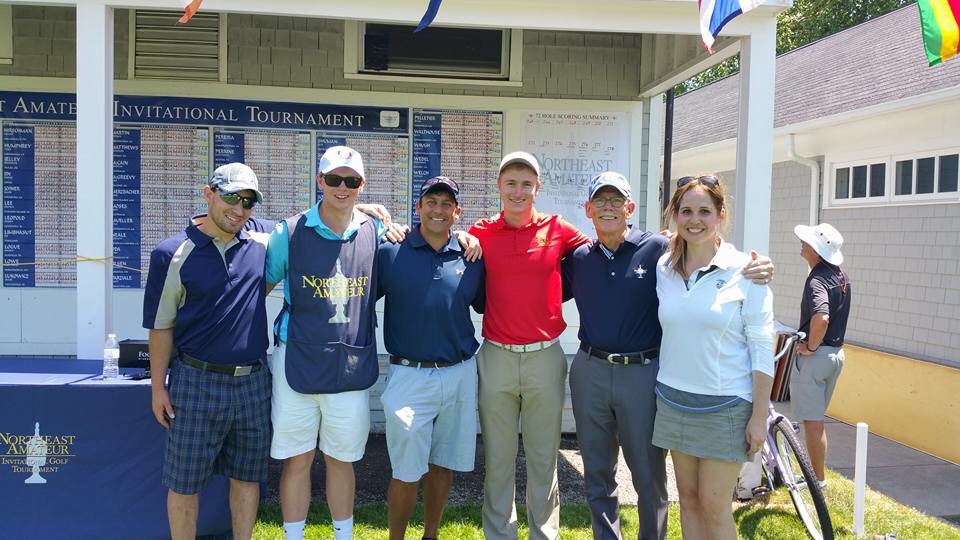
The Northeast Amateur tournament began in 1962 and was played as a 54 hole event until 1968. The Tournament is an invitational event conducted as stroke play over 72 holes and is limited to 90 players. Contestants are selected on the basis of their competitive record and accomplishments in major tournaments. The play is over four days with an 18 hole round each day.

Nick tied for 27th with rounds of 66, 68, 73 and 70 for a total of 277.  The winner of the tournament was Fred Wedel who finished on 270 or 6 under for the tournament.  Nick played in this tournament last year and finished tied for 5th.

This was the third week of tournament play for Nick and he said his body is holding up well.  He has learnt that when you are travelling, allowing your body to rest is just as important as practising.  He felt that he hit his driver better this week but is still looking for improvement.  He is very pleased with his 2 iron play and is achieving good distance and accuracy off the tee with this club.

Nick and his host family.  


Nick and his Pro- Am group. 

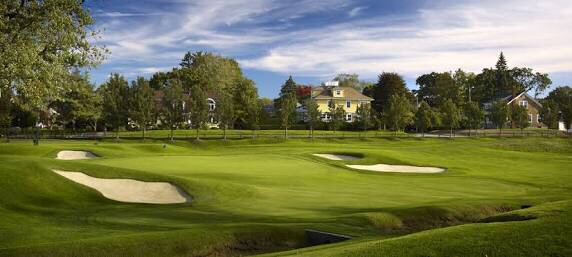
Wannamoisett Country Club

The Wannamoisett Country Club is a private golf course located in Rumford, Rhode Island. The course was designed by Donald Ross in 1914 and played host to the 1931 PGA Championship (which was won by Tom Creavy) and hosts the prestigious Northeast Amateur every year. This par 69 course plays 6,688 yards long from the blue tees and 6,399 yards long from the white tees. The fairways are lined with very thick rough and the large, undulating greens are difficult to read. It is currently ranked as the number one course in Rhode Island by Golf Digest.

Wannamoisett Members are justifiably proud of their Donald Ross designed championship golf course. Impeccably conditioned, with 18 subtle, undulating greens and carefully placed bunkers, Wannamoisett is widely considered to be among Ross’ finest layouts. Golfers of all ages and abilities find the course challenging and enjoyable. Situated on approximately 100 acres, Wannamoisett is easy to walk and is prided on its caddie program. 

The members of Wannamoisett have recently invested $3 million in the golf course to preserve Ross’ legacy for future generations. The results are improved playability for golfers of all skill sets, including the installation of a state-of-the-art computerized irrigation system, the rehabilitation of 99 bunkers, and the addition of new forward and back tees.

Membership at Wannamoisett is limited to ensure an open play philosophy. Members play when they want and tee times are not necessary.

Donald Ross described the ideal golf courses as, “one that presents a test of golf for the everyday golfer and the first class player. A properly designed course can take care of every class of golfer. My aim is to bring out of the player the best golf that is in him. It will be difficult to negotiate some holes, but that is what golf is for. It is a mental test and an eye test. The hazards and bunkers are placed so as to force a man to use judgment and to exercise mental control in making the correct shot.” 

Posted in Rhode Island, United States of America | Tagged | Leave a comment

Sunnehanna Amateur Tournament for Champions – Pennsylvania, USA 

The Sunnehanna Amateur was inaugurated in July of 1954 – it was the first country club sponsored 72 hole stroke play competition for amateurs in the United States.  The tournament is played on a classic A.W. Tillinghurst designed course – Sunnehanna Country Club.  Only one other amateur tournament in the United States can list the likes of Chick Evans, Arnold Palmer, Julius Boros, Art Wall, Jack Nicklaus, Phil Mickelson, Tiger Woods and Rickie Fowler as contestants: the United States Amateur.  

Nick played in this tournament between the 15th and 18th June.  Unfortunately it was shortened to 54 holes due to bad weather.  Nick made the cut and finished in a tie for 42nd on plus 3 – he shot rounds of 70, 71 and 72.  The winner, Colin Morikawa, finished up on 11 under after a final round of 62.  Par on the course is 70.


Nick and his fellow competitor Troy Moses from Australia were hosted by a local family for the week which they enjoyed.


Sunnehanna Amateur Foundation

Sunnehanna Amateur Foundation, Inc. is a non-profit organization founded in 2015. The primary purpose of the Sunnehanna Amateur Foundation, Inc. is the promotion of a national and international amateur golf competition, Sunnehanna Amateur Tournament, held annually in Johnstown, PA. The tournament invites players who have participated in the Walker Cup, NCAA, USGA Amateur Events, and players who rank in the top 150 of the Golfweek/Sagarin Amateur Rankings.  Nick’s ranking on the Golfweek/Sagarin rankings on the 20th June was 141.  His current world amateur ranking is 87.

The World Amateur rankings cover more than 9,100 players from 102 countries, and more than 4,100 ranking tournaments played in 102 countries.

The Golfweek/Sagarin rankings takes into account the performance based on a lesser number of tours over a 52 week period.

Second, the Sunnehanna Amateur will sponsor youth educational activities, such as an instructional golf clinic for children in the Greater Johnstown area. The players who are participating in the Sunnehanna Amateur will conduct basic instructions on the golf swing. Each child will receive a hat for participating at the clinic. In addition, children who have played in junior events or on high school golf teams will play with one of the participants in the Junior-Amateur tournament.This year’s contributions will aid the Johnstown Backpack Project, an effort of nine local organizations working together to ensure that children do not go hungry over the weekend. Volunteers pack bags full of ready-to-eat meals that reach more than 350 children in the Johnstown area every weekend during the school year. 

Sunnehanna Country Club

The golf course at Sunnehanna is a terrific example of an Albert W. Tillinghast design. Perched on a hilltop, the course meanders 360 degrees around the clubhouse. The greens are basically small in size, well bunkered, requiring accurate iron play. The ball needs to be placed below the pin to produce the best chance for a birdie. Fairway bunkers generally are only on one side of the fairway, which is a typical Tillinghast characteristic.

Like many of its brethren designed in the early 1920’s, the course has evolved over time. Built prior to the advent of central watering systems, Sunnehanna was designed to play bump and run shots. The course when playing as designed, plays hard and fast with shots meant to be played short of the greens. This accounts for the open entrance to the greens. The course was relatively free of trees. 

In 1956, in response to the success of the Sunnehanna Amateur and the growing influence of parkland golf, Sunnehanna would also change. New trees were added throughout the course, specifically mentioned in tournament notes were 50 trees on the right of #6 and #11, to name a few. 

That same year, the gully on #8 would be built, with a new green added as well. Both would be used in tandem for the first time in 1959. Six new tees would also be added, adding over 250 yards to the overall length of the course. 

The very nature of the course played today was influenced by the changes made in 1956 to provide a more challenging course for the Sunnehanna Amateur.

In 1960, par would be reduced from 72 to its current par 70. The previously benign 6th hole would be lengthened from 426 yards to 453 yards and changed from a par 5 to a par 4. The 14th hole was reduced from a 297-yard par 4 to a 250-yard par 3. By 1961, the impact of the changes were apparent, as the 6th hole yielded not a single birdie that year. The 8th hole would play almost a half stroke more difficult with the addition of the new tee and green.

The strength of Sunnehanna is its par 3s. Varying in length from 171 to 241 yards, they demand an array of various shots. In fact, in the 2000 Sunnehanna Amateur, the 14th, 5th and 10th , all par 3’s, were the 3rd, 4th, and 5th most difficult holes, respectively.

The front nine is by far the more difficult of the nines. The second hole, a demanding uphill dogleg right measuring 409 yards,commands a solid drive, but a more demanding uphill second shot to an elevated green. Any ball above the hole demands a deft putting touch. It regularly ranks as the second most difficult hole during the tournament.

Number six is the #1 handicap hole on the course, a dogleg right measuring 435 yards. The yardage is deceiving with an uphill tee shot, which typically will be played into the prevailing wind creating a hole which can play considerably longer. This hole usually is the hardest hole during the Amateur and has been designated by the USGA Golf Journal as one of America’s great holes.

Sunnehanna is truly a great golf course that has withstood the test of time. The club has recently begun the reconstruction of the fairway and greenside bunkers to return them to their originally intended design. Greens, which had also shrunk, have been brought back to their original size. These subtle changes have resulted in a more aesthetically interesting and demanding course. It is a layout that members and the best players in amateur golf recognize as a terrific test of golf, which is fair and challenging at the same time. 

With these relatively minor changes performed on the course, the scoring average for the Amateur field has changed very little in the 47-year history of the Sunnehanna Amateur. 

The average score over all the years has been 74.09 for 18 holes. A round of golf played on the beautiful course can rarely be described as a “good walk spoiled”.

Posted in Pennsylvania, United States of America | Tagged | Leave a comment

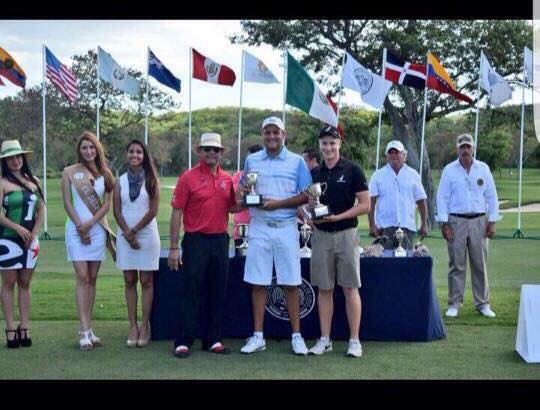
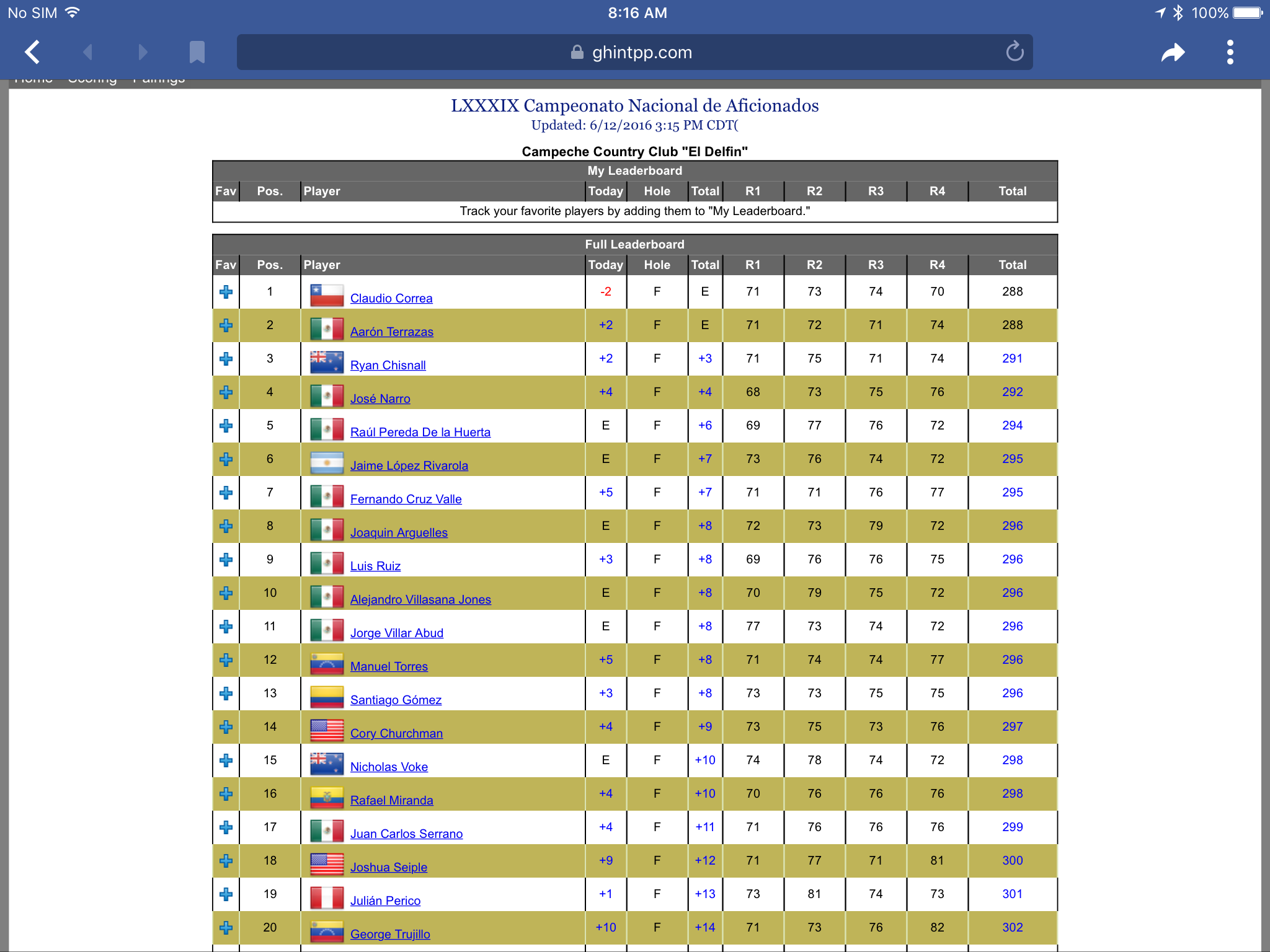
LXXXIX Amateur National Championship – Mexico

Nick travelled to Mexico to play in the Amateur National Championship which was held between the 9th and 12th June on the Dolphin Course at the Campeche Country Club.  The Campeche Country Club is located in the State of Campeche which is in Southeast Mexico.
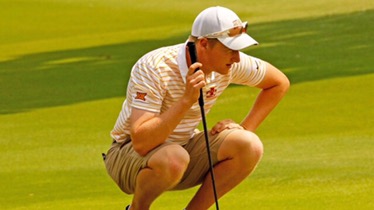
There were 100 amateur golfers from 10 different countries participating.  The field was cut to 60 after the first two rounds of which Nick was one.  Nick described the course as weirdly tricky.  He finished 15th with rounds of 74, 78, 74 and 72 and a total of 298.  The winner was Aaron Terrazas from Mexico who finished on 288.  Nick’s fellow compatriot, Ryan Chisnall finished in third place on 291.  Nick and Ryan combined to take second place in the country event.


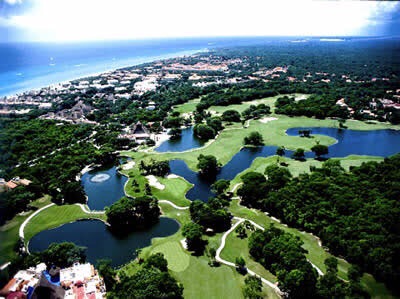
Campeche Country Club – Dolphin Course

The Dolphin Course is set in the middle of nature and was inspired by the beauty of the region with it’s attractive scenery and extensive vegetation.  It has some hilly terrain which lends itself to some challenging shot making.

The course was designed by Greg Letsche who has been designing golf courses for over 20 years.  He joined the Ernie Els Design team in December 2005. Priorate that he had spent 15 years with Jack Nicklaus and began his career with the legendary Pete Dye. Greg has developed some outstanding projects in Cape Town (Pearl Valley Golf Club), Dubai (The Els Club), Hawaii (Hoakalei Country Club) and Florida (The Bear’s Club) to name a few. 

Posted in Mexico | Tagged | Leave a comment

NCAA Stillwater Regional – Oklahoma, USA

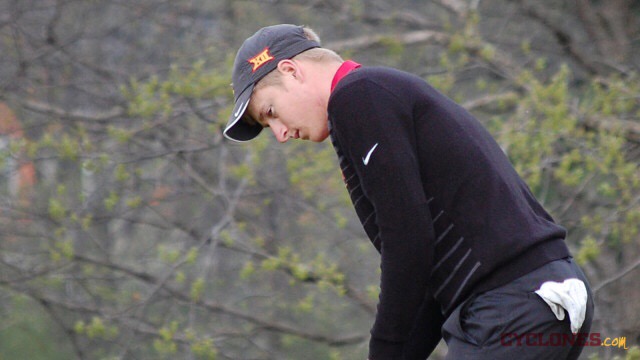
Nick’s fantastic season culminated in making the National Collegiate Athletic Association’s regional playoffs in Stillwater, Oklahoma held from the 16th to the 18th May.  The tournament was held at the Karsten Creek Golf Club.

Nick was the lone participant from the Cyclones in the Regional Tournament competing as an individual.  There were 14 colleges participating and 5 individuals.  There were six regional competitions held around the US with the top five teams and the top individual going through to the National Tournament being held at the Eugene Country Club.

Nick finished in a tie for 22nd on 228 after carding rounds of 70, 81 and 77.  Kristoffer Ventura of Oklahoma State was the medalist at 216 with University of Missouri-Kansas City’s Antoine Rozner securing the lone individual berth to the NCAA finals by finishing second in the medalist race at 217.


Karsten Creek Golf Club

In the 1970’s Mike Holder (former Oklahoma State University (OSU) Head Golf Coach and current OSU Athletic Director) envisioned a sanctuary for college golf. After many years of planning and fundraising, the pieces were finally in place to create what is now Karsten Creek. With the talents of renowned golf course designer, Tom Fazio, spawned one of the most challenging golf courses in the country. On May 9th, 1994, the course opened, and was named the “Best New Course” in the country by Golf Digest. The zoysia fairways were cut from a forest of oaks and black jacks, complemented by an undulating terrain that flows throughout the course. The back nine cascades around the 110 acre Lake Louise that is featured on the finishing holes. Complementing the course, are the clubhouse, two multi-level guest lodges, and state of the art practice and teaching facilities. 

Karsten Creek was so named to honor the late Karsten Solheim, founder of Karsten Manufacturing (PING), and Lake Louise honors his wife. The Solheims support of OSU golf over the last 20 years has been instrumental in the success of the golf program. As the home of the Oklahoma State Men’s and Women’s golf programs, the course is kept in a challenging condition, allowing team members to maintain their competitive edge.


NCAA

The National Collegiate Athletic Association (NCAA) is a non-profit association which regulates athletes of 1,281 institutions, conferences, organizations, and individuals. It also organizes the athletic programs of many colleges and universities in the United States and Canada, and helps more than 450,000 college student-athletes who compete annually in college sports. The organization is headquartered in Indianapolis, Indiana. In 2014, the NCAA generated almost a billion dollars in revenue. 80 to 90% of this revenue was due to the Men’s Division I Basketball Tournament. This revenue is then distributed back into various organizations and institutions across the United States.

In August 1973, the current three-division setup of Division I, Division II, and Division III was adopted by the NCAA membership in a special convention. Under NCAA rules, Division I and Division II schools can offer scholarships to athletes for playing a sport. Division III schools may not offer any athletic scholarships. Generally, larger schools compete in Division I and smaller schools in Division II and III.  Iowa State University is a Division I college so they compete against other Division I colleges throughout the season in the lead up to the NCAA Regionals.

Inter-collegiate sports began in the US in 1852 when crews from Harvard University and Yale University met in a challenge race in the sport of rowing.    For several years, the NCAA was a discussion group and rules-making body, but in 1921, the first NCAA national championship was conducted: the National Collegiate Track and Field Championships. Gradually, more rules committees were formed and more championships were created, including a basketball championship in 1939.

Until the 1980s, the association did not offer women’s athletics. Instead, an organization named the Association for Intercollegiate Athletics for Women (AIAW) governed women’s collegiate sports in the United States. By 1982, however, all divisions of the NCAA offered national championship events for women’s athletics and most members of the AIAW joined the NCAA. A year later in 1983, the 75th Convention approved an expansion to plan women’s athletic program services and pushed for a women’s championship program.

Over the last two decades recruiting international athletes has become a growing trend among NCAA institutions. For example, most German athletes outside of Germany are based at US-universities. For many European athletes, the American universities are the only option to pursue an academic and athletic career at the same time. Many of these students come to the US with high academic expectations and aspirations.

Posted in Oklahoma, United States of America | Tagged , , | Leave a comment

Big 12 Championship – Texas, USA

The Iowa State Cyclones played in the Big 12 Championships from the 29th April to the 1st May.   This tournament was played over 72 holes at Whispering Pines in Trinity, Texas. 

Nick fired a final round 69 at the Big 12 Championship to earn all-tournament honors at the Big 12 Championship for the third consecutive season.  He finished eighth in the medalist race with a total of 287, five shots behind Oklahoma State’s Stratton Nolen, who was the medalist with a four round total of 282.

As a team, the Cyclones placed ninth with an 1196 tally.  Texas was crowned the champion at 1138.

Voke is the first Cyclone in school history to finish in the top-10 at the Big 12 Championship three times, finishing T9 (2014), T10 (2015) and 8th (2016) in his three appearances at the conference meet. He was tied with Scott Fernandez (2013, 2015) for the most top-10 showings at the Big 12 Championship heading into this weekend.

This result rounded off one of the best seasons in Cyclone golf history. He was recognized for his efforts by earning All-Big 12 Men’s Golf First Team, announced by the league office.  Nick was one of 10 golfers to earn All-Big 12 honors. All members are ranked in the top-80 nationally, including Nick, who is ranked 70th by Golfweek’s individual rankings.

Nick joins Scott Fernandez (2013), Nate McCoy (2012), Chris Baker (2008), Matt Lewis (1998), Jason Knutzon (1997) and Donnie Teeter (1997) in an elite group of Cyclone golfers to be named All-Big 12 first team. 
2016 All-Big 12 Team
Beau Hossler, Texas, Jr.
Doug Ghim, Texas, So.
Gavin Hall, Texas, Jr.
Jordan Niebrugge, Oklahoma State, Sr.
Max McGreevy, Oklahoma, Jr.
Kristoffer Ventura, Oklahoma State, So.
Stratton Nolen, Oklahoma State, So.
Nick Voke, Iowa State, Jr.
Paul Barjon, TCU, Sr.
Brendon Jelley, Oklahoma State, So.

Nick made it to the postseason by earning an individual berth to the NCAA Stillwater Regional, May 16-18 at the Karsten Creek Golf Club.


Whispering Pines

Set along the shores of Lake Livingston, Whispering Pines Golf Club rests on 450 acres of beautiful pine and hardwood forest. The property was acquired by Barbara and Corby Robertson in 1970 for neighboring Camp Olympia, a renowned summer camp. Mr. Robertson staked out the golf course routing in 1992. Timber was cleared, seed was sown, and soon afterward, “Olf” (golf without the greens) was being played by Camp Olympia’s Junior Golf Program. By the mid-nineties, Camp Olympia Golf Course, as it was known then, was partially complete and featured the first Flora Dwarf greens in Texas.

In 1998, Mr. Robertson’s vision broadened to create world-class golf to support the Texas Medical Center, health related causes, and the promotion of amateur golf. The new vision founded the World Health and Golf Association (WHGA), a charity organization that manages all membership and tournament activities at Whispering Pines. The WHGA Membership program consists of Individuals, National, Corporations, Spirit Tournament Sponsors, and Charitable Partners who make an annual contribution to support WHGA charitable beneficiaries. Through their annual contribution, WHGA members enjoy membership benefits to Whispering Pines Golf Club. Operating on a two season basis from March to July and September to December, Whispering Pines offers members and their guests an intimate, world class golf experience.

Chet Williams of the Nicklaus Design Group was hired to design the best course in Texas. Twenty months later, in March 2000, Whispering Pines Golf Club opened its doors, and as golfers found their way, rave reviews ensued. It is a 7,473 yard, par 72 course.  Whispering Pines debuted as the 3rd Best New Private Course in the nation by Golf Digest. Since 2006 Whispering Pines has held the number one course in Texas ranking by the Dallas Morning News. 


The Big 12 Conference

The Big 12 Conference is a ten-school collegiate athletic conference headquartered in Irving, Texas. It is a member of the National Collegiate Athletic Association’s (NCAA) Division I for all sports; its football teams compete in the Football Bowl Subdivision (FBS; formerly Division I-A), the higher of two levels of NCAA Division I football competition. Its ten members, located in Iowa, Kansas, Oklahoma, Texas, and West Virginia, include eight public and two private Christian schools.  The Big 12 includes 23 sports – 10 in which men compete in and 13 in which women compete in.

The Big 12 was formerly composed of 12 schools, hence its name: it was formed in 1996 when four schools from the collapsing Southwest Conference (Texas, Texas A&M, Texas Tech and Baylor) joined with the pre-existing Big Eight Conference. Oklahoma and Oklahoma State were grouped with the four newcomers in the “Big 12 South”, while the remaining 6 teams of the Big 8 (Kansas, Kansas State, Colorado, Nebraska, Missouri and Iowa State) formed the “Big 12 North”.

The conference’s current 10-campus makeup resulted from the 2010 to 2013 Big 12 Conference realignment, in which Nebraska joined the Big Ten Conference, Colorado joined the Pac-12, and Missouri and Texas A&M joined the Southeastern Conference. Texas Christian University and West Virginia joined from the Mountain West and Big East Conferences respectively to offset two of the departing schools, bringing the conference to its current strength.

The current members of the Big 12 are University of Texas, University of Oklahoma, Baylor University, University of Kansas, West Virginia University, Oklahoma State University,, Texas Christian University, Kansas State University, Texas Tech University and Iowa State University.

The Big 12 Conference, like others involved in the realignment, has kept its name primarily for marketing purposes; the conference has high name recognition and remains one of the Power Five conferences which are considered the primary contenders to produce a College Football Playoff champion team in any given year. Attempts to rename the Big 12 to reflect its current strength would lead to confusion with the current Big Ten Conference (which currently has 14 teams). The Big 12 is also considered one of the Premier Seven Conferences in basketball.

Like the Southwest Conference, the Big 12 footprint has a small population base. It has the smallest population base by far of the contract conferences. Texas, Oklahoma, Kansas, West Virginia and Iowa have a combined population of 37.8 million.
Conference revenue comes mostly from television contracts, bowl games, the NCAA, merchandise, licensing and conference-hosted sporting events.   The revenue for the Big 12 conference in 2015 was USD252 million.

In 2015 Iowa State University earnt USD66 million in revenue which was in line with the expenses for the same year. The average spend per student for the 2015 year was USD129,000.

Revenue includes ticket sales, contributions and donations, rights/licensing, student fees, school funds and all other sources including TV income, camp income, food and novelties. Total expenses includes coaching/staff, scholarships, buildings/ground, maintenance, utilities and rental fees and all other costs including recruiting, team travel, equipment and uniforms, conference dues and insurance costs. 

Posted in Texas, United States of America | Tagged , , | Leave a comment

Hawkeye Invitational – Iowa, USA

Another good weekend for the Iowa State Cyclones finishing tied for second at the Hawkeye Invitational in Iowa.  Nick’s teammate Ruben claimed medalist honours with a three round tally of 206.  Nick finished in a tie for thirteenth on 216 – he had rounds of 69, 75 and 72.  This is Nick’s eigth top twenty finish in the ten tournaments he has competed in this season.

The tournament was played at Finkbine Golf Course which is home to the University of Iowa’s Men’s and Women’s Collegiate teams the Hawkeyes.  The Hawkeyes are Iowa State’s nearest rivals whom they tied for second with in this tournament.

Finkbine Golf Course

The golf course is named after W.O. Finkbine who donated the land to the University of Iowa.  It is a scenic golf course and from the championship tee stretches over 7,200 yards of rolling Iowa terrain.  The course has played host to many NCAA tournaments over the years – it plays to a par 72 with a USGA rating of 74.6 and a slope rating of 134. 


Posted in Iowa, United States of America | Tagged , , | Leave a comment